
The short e sound can be surprisingly tricky for young readers. It’s subtle, easily confused with short i, and often overlooked in early phonics instruction. But with a little creativity and the right mix of activities, students can master short e and feel more confident reading and spelling CVC words.
Here are some of my favorite tips for making short e stick, with minimal prep and maximum engagement.
1. Start with Sound Discrimination
Before students even see the letter e, help them hear the sound. Say pairs of words like “pen” and “pin” or “met” and “mat” and ask students if the vowel sound is the same or different. I like to do this as a quick warm-up or brain break. The best part is there are no materials needed for this activity.
Try This: Use picture cards or real objects to play “short e or not?” Have students sort them by sound only. This can be very effective for auditory processing!
2. Connect Words to Pictures
Once students can hear the short e sound, it’s time to link that sound to print. Matching games, word sorts, and simple drawing tasks can help solidify this connection. I often use low-prep worksheets that let students read, trace, draw, or circle words and pictures.
It doesn’t have to be fancy. What matters is that students are repeatedly seeing and using e words in a variety of ways.

3. Build in Repetition Without Boredom
Repetition is essential, but that doesn’t mean it has to feel repetitive. I like to rotate activities—one day we do a word search, another day we read silly short e sentences. Even simple tasks like spinning a paperclip to “spin and write” can make a big difference in engagement.
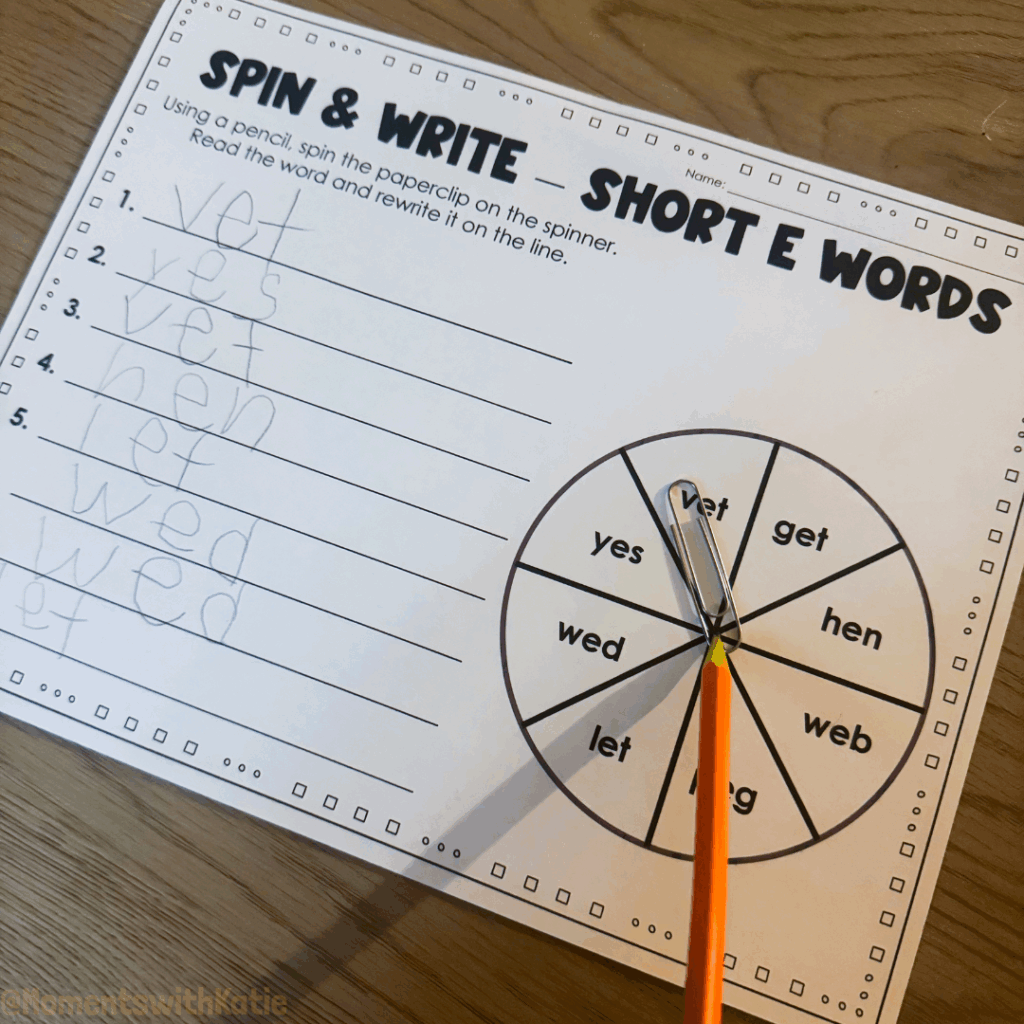
If you’re looking for done-for-you printables, I’ve bundled 10 of my favorite short e worksheets into one easy-to-use download. The bundle includes:
- Picture sorts
- Word and picture matching
- CVC word tracing
- Sentence work
- Spin-and-write games
- And more!
You can print and go, or pick and choose what fits your lesson best.
Teaching short vowels doesn’t have to be stressful.
With consistent exposure and a little variety, students can master the short e sound—and actually enjoy the process. Whether you’re in a classroom, tutoring online, or homeschooling, flexible resources make all the difference.

Want a closer look at the worksheets I use? Check out the full Short E Worksheet Bundle here.
